A Transformational Shift in Waste Management
India has entered a new era of waste management with the implementation of the Solid Waste Management Rules, 2026, effective from April 1. This upgraded framework mandates a four-bin waste segregation system, replacing the outdated two-bin approach. The initiative is designed to streamline waste processing, enhance recycling efficiency, and drastically reduce environmental pollution.
We now adopt a more structured and disciplined system that ensures waste is segregated at the source, enabling faster disposal, better recycling, and improved public health outcomes.
Understanding the 4-Dustbin Waste Segregation System
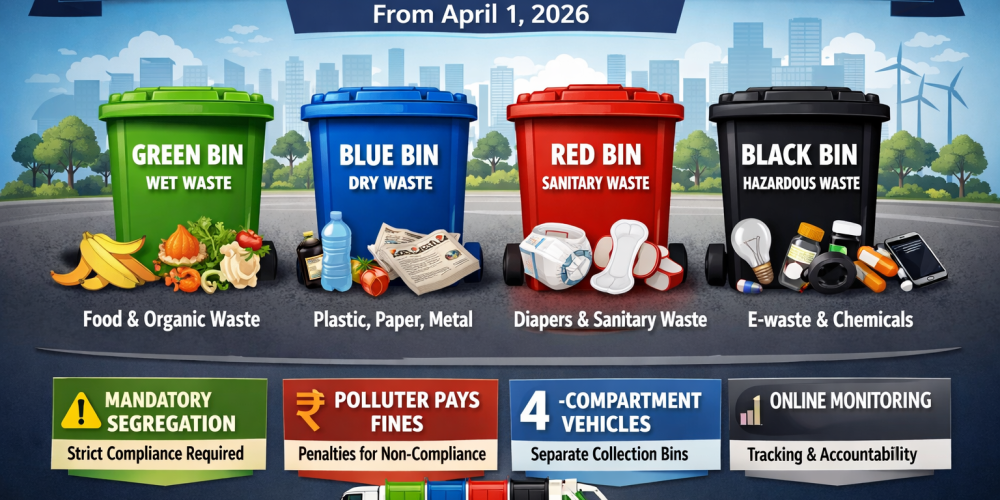
The new system introduces four distinct color-coded bins, each serving a specific purpose. This structured approach eliminates confusion and ensures accurate categorization of waste.
1. Green Bin – Wet Waste (Biodegradable Waste)
The green bin is designated for organic and biodegradable waste. This includes:
- Food leftovers
- Vegetable and fruit peels
- Tea leaves and coffee grounds
- Garden waste such as leaves and grass
This category of waste decomposes naturally and can be converted into compost or biogas, reducing landfill burden significantly.
2. Blue Bin – Dry Waste (Recyclables)
The blue bin is meant for non-biodegradable but recyclable materials, including:
- Plastic containers and packaging
- Paper, cardboard, and newspapers
- Glass bottles and jars
- Metals such as aluminum cans
Proper segregation of dry waste ensures efficient recycling processes, helping conserve natural resources and reduce industrial waste.
3. Red Bin – Sanitary Waste
The red bin addresses sanitary and biomedical household waste, which requires careful handling. This includes:
- Diapers
- Sanitary napkins
- Bandages and medical waste
This waste is potentially hazardous and must be disposed of separately to prevent health risks and contamination.
4. Black Bin – Hazardous and Special Waste
The black bin is reserved for hazardous and toxic waste materials, such as:
- Expired or unused medicines
- Paints and chemicals
- Batteries and bulbs
- E-waste including small electronic devices
This category requires specialized disposal methods to avoid environmental damage and ensure safe processing.
Why the Four-Bin System is a Game-Changer
The transition from two bins to four bins marks a significant advancement in waste management efficiency. By segregating waste into precise categories, we achieve:
- Higher recycling rates due to cleaner material separation
- Reduced landfill pressure, extending landfill life
- Lower environmental pollution through proper disposal
- Improved sanitation standards across urban and rural areas
This system ensures that waste is handled correctly from the very beginning, eliminating the need for complex sorting at later stages.
Strict Enforcement and Compliance Measures
The new rules introduce strict compliance requirements to ensure nationwide adoption.
Collection Refusal Policy
Sanitation workers are now authorized to refuse collection if waste is not properly segregated. This enforces accountability at the household and commercial levels.
Penalties Under Polluter Pays Principle
Non-compliance may result in financial penalties, reinforcing the principle that those who generate waste must manage it responsibly.
New Infrastructure and Collection Mechanisms
To support the four-bin system, municipalities are implementing advanced waste collection infrastructure.
Four-Compartment Garbage Vehicles
Garbage collection vehicles are being redesigned with four separate compartments, ensuring:
- No mixing of waste during transportation
- Efficient transfer to processing facilities
- Faster unloading and sorting
Upgraded Waste Processing Facilities
Waste management plants are being modernized to handle segregated waste streams, enabling:
- Composting of wet waste
- Recycling of dry materials
- Safe disposal of hazardous waste
Rules for Bulk Waste Generators
The regulations impose specific responsibilities on bulk waste generators, including:
- Hotels
- Large residential societies
- Government institutions
- Commercial complexes
On-Site Waste Processing Requirement
Facilities generating more than 100 kg of waste per day must:
- Process wet waste on-site through composting or bio-digestion
- Ensure proper segregation before disposal
This reduces dependency on municipal systems and promotes self-sustained waste management practices.
Digital Monitoring and Accountability
A key highlight of the new rules is the introduction of an online monitoring system by authorities.
Centralized Waste Tracking System
This system enables:
- Real-time monitoring of waste segregation practices
- Tracking compliance across regions
- Identifying areas with poor implementation
Digital oversight ensures transparency, efficiency, and data-driven decision-making.
Impact on Environment and Public Health
The four-bin system delivers long-term environmental and health benefits.
Reduction in Landfill Waste
By segregating waste at source, only non-recyclable and inert waste reaches landfills, significantly reducing their volume.
Lower Pollution Levels
Proper handling of hazardous and sanitary waste minimizes:
- Soil contamination
- Water pollution
- Air pollution from burning waste
Improved Urban Cleanliness
Cleaner streets, reduced garbage overflow, and better hygiene standards contribute to healthier living conditions.
Step-by-Step Guide for Households
We recommend the following approach to ensure full compliance:
- Place four labeled bins in your home
- Educate all family members about waste categories
- Segregate waste daily at the source
- Avoid mixing categories at any stage
- Hand over segregated waste to collection staff
Consistency in these practices ensures smooth implementation and avoids penalties.
Common Mistakes to Avoid
To ensure proper adherence, avoid these errors:
- Mixing wet and dry waste in one bin
- Disposing sanitary waste in green or blue bins
- Throwing hazardous materials with general waste
- Ignoring segregation due to convenience
Correct segregation is essential for the success of the entire system.
Role of Citizens in Sustainable Waste Management
The effectiveness of the four-bin rule depends on active citizen participation. Every household contributes to:
- Reducing environmental impact
- Supporting recycling industries
- Promoting sustainable living
Responsible waste management is not just a regulation—it is a collective responsibility toward a cleaner future.
A Cleaner Future Begins at Home
The introduction of the Green, Blue, Red, and Black bin system marks a decisive step toward modern, efficient, and sustainable waste management. With strict enforcement, improved infrastructure, and active citizen participation, we move closer to a future with minimal waste, maximum recycling, and reduced environmental harm.
By adopting this system diligently, we ensure that waste is no longer a problem but a resource managed intelligently.